Commercial Disinfection: Why “Looking Clean” Is Not Enough
How and why does it happen that, under conditions of perfect cleanliness, an inspection still finds pockets of contamination? Where do the bacteria come from and multiply — the ones that, in a conscientious business, should never have appeared in the organization at all? By what rules and methods can offices, hotels, food-service facilities, and places where people gather be cleaned so that the risk of detecting and spreading bacteria invisible to the eye is truly eliminated? Why is it that, even under conditions of perfect cleanliness, we still face such a threat?
It all comes down to the simple reason that the most dangerous bacteria live precisely where we cannot see them with the eye — on kitchen handles, on ventilation grilles, beneath refrigerator coils. Listeria (Listeria), Salmonella (Salmonella), Escherichia coli (E. coli) are types of dangerous and rapidly spreading bacteria, and preventing their epidemic proliferation is not simple — not merely after cleaning the relevant products or the suspected sources of spread.
Once bacteria have been detected, the scale of their spread is large and dangerous, and standard cleaning cannot eliminate or prevent all of this. The aim and object of professional disinfection is not only to detect and clean contaminated pockets, but to detect and destroy the invisible pests and bacteria — everything that pests carry from one place to another in one way or another.
Cleaning and Disinfection — The Difference and the Risks in Commercial Spaces
Naturally, cleaning control is a constant process in any operation; however, even a perfect cleaning process only removes dirt from the surface. Disinfection, on the other hand, destroys microorganisms — bacteria, viruses, fungi — using special chemical or technological methods. In a restaurant, a medical clinic, or a hotel, both are needed, but only one of them protects our reputation and the health of our customers and employees.Where the Problem Hides — Commercial Facilities and Risk Zones
With 20 years of experience, Balaveri’s specialists often say that most clients focus on the most visible surfaces, and during service the very places where bacteria are best hidden and multiply are the ones left untouched. Kitchen handles and cutting boards are classic sources of cross-contamination. The ventilation system is a “transit hub” for bacteria — a single contaminated grille contaminates the entire facility. In hotels, soft furniture and curtains remain a “dead zone” for standard cleaning, while waste zones are pests’ main source of attraction.Pests and Disinfection in Commercial Facilities
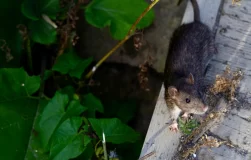
Here many business owners make a critical mistake when they try to solve the problem locally, on a one-off basis. But it is worth noting that cockroaches, flies and rodents are permanent carriers of bacteria. If pests have been spotted in a facility even once, traps, cleaning, and a one-off disinfection will destroy them — but if a pest appears even once, we must assume that behind it lies an entire colony, that it is already nearby, and that the risk of bringing in new, larger quantities of bacteria is high, if not inevitable. That is exactly why Balaveri works with a combined approach: disinfection, disinsection, and pest control in a single cycle. This is not a “package” — it is a logic.What Neglecting Disinfection Causes in a Commercial Facility
A facility may “look clean,” yet a sanitary-epidemiological inspection or a HACCP audit reveals pockets of bacteria, and it becomes clear that the invisible problem had already existed for weeks or months. Experience shows that more than 80% of businesses in this situation react only when it is already too late. A fine, closure of the facility, a photo of a pest spread on social media, reputational and financial damage — all of this is ten times more expensive than prevention.Professional Commercial Disinfection from Balaveri — How It Works
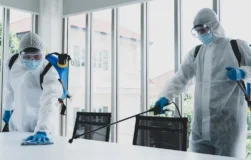
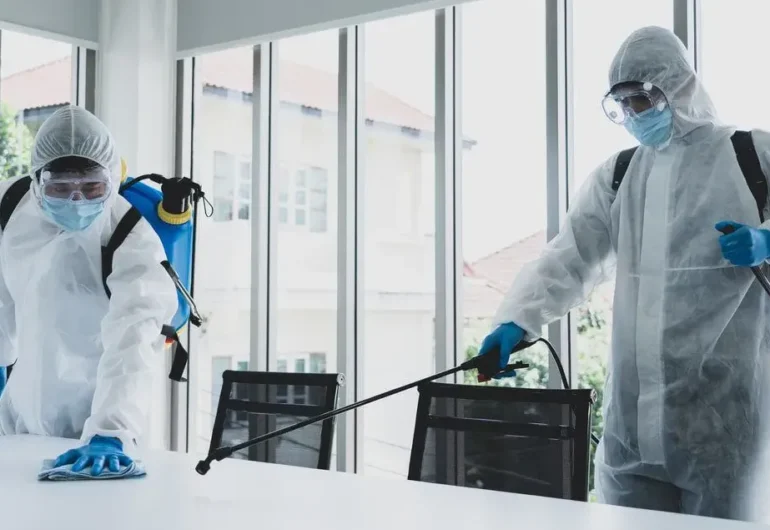
The first visit always begins with inspection, not with chemicals. Our specialist identifies the risk zones, chooses the method according to the specifics of the facility, and establishes a cycle. The process includes:- Chemical treatment according to the specifics of the facility
- Cleaning of ventilation systems — blocking the spread of bacteria
- Documentation in accordance with ISO 9001, ISO 14001, and ISO 45001 standards
- Regular monitoring — since a one-off visit does not guarantee results